Preface,
In the occupied West Bank, the uprooting of Palestinian trees is not merely an assault on nature and environment; it is an act that strikes Palestinian culture, history, and existence, targeting both people and land together. For many years, Palestinian fruit-bearing trees—especially olive trees—have been subjected to uprooting, vandalism, and destruction by Israeli settlers living in illegal settlements in the occupied West Bank, as well as by the Israeli occupation army who back settler groups in their attacks. These assaults reflect the settlers’ and army’s broader plans/policies aimed at controlling Palestinian land, pressuring Palestinians, and forcing them to leave.
In recent years, attacks by Israeli settlers have increasingly targeted olive trees, which hold deep symbolic value in the Palestinian culture and serve as a cornerstone of the agricultural economy. Hundreds of Palestinian families depend on olives as a primary source of income, whether through olive oil production or related products. The uprooting or destruction of these trees—many of which are decades old—results in direct loss of livelihood, pushing families toward poverty and, in some cases, forcing them to leave their homes due to continued and direct attacks.
Following the outbreak of the Israeli war on the Gaza Strip in October 2023, Israeli settler groups intensified their attacks on Palestinian communities, particularly Bedouin communities, aiming to force them to leave and seize their land and property. According to the Israeli Information Center for Human Rights in the Occupied Territories (B’Tselem), 45 Palestinian Bedouin communities in the occupied West Bank were completely displaced due to ongoing settler violence, affecting more than 3,000 Palestinians.
Ramallah governorate recorded the highest number of displaced communities, followed by the Hebron governorate in the southern West Bank. Additionally, 13 other Palestinian communities across the occupied West Bank witnessed partial displacement for the same reasons. [1]
The uprooting of Palestinian trees goes beyond threatening livelihoods and cultural heritage; it also destroys the Palestinian environment, disrupts ecological balance, and harms biodiversity. This destruction contributes to the degradation of agricultural land, accelerates desertification, and has negative impacts on local climate.
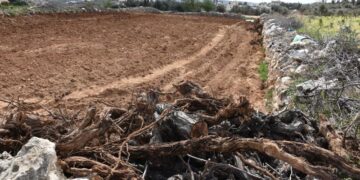
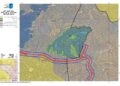
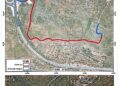
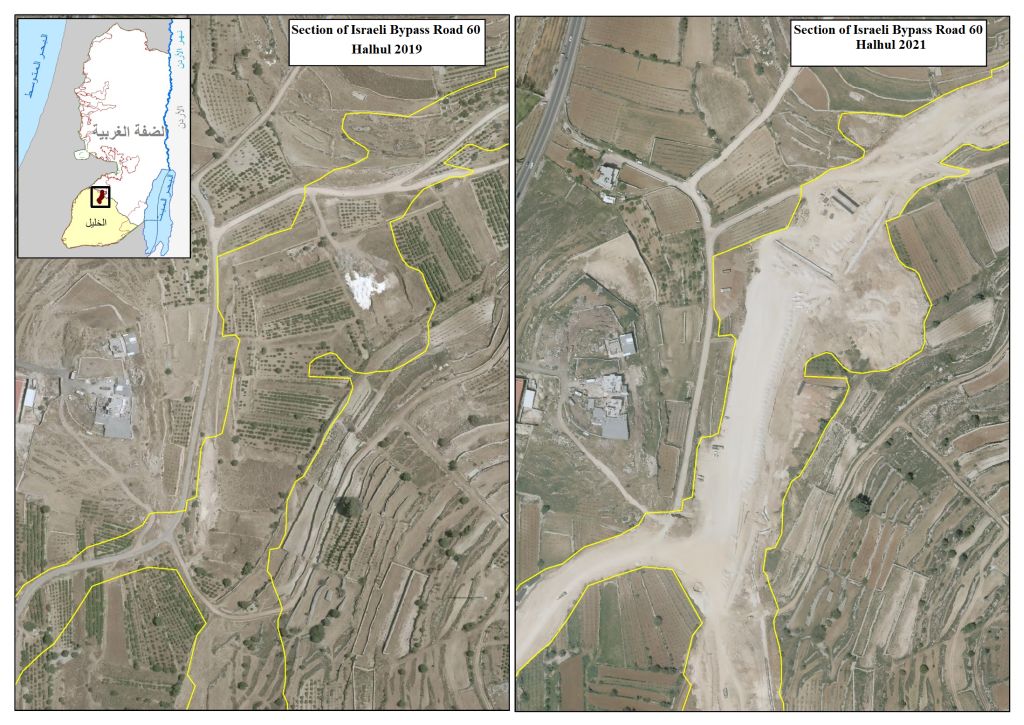
It is worth noting that when the Israeli occupation authorities embarked on the development of several Israeli bypass roads in the occupied West Bank, this resulted in significant environmental damage, with Palestinian trees being among the most heavily targeted. For instance, in Nablus governorate, the “Huwara Bypass Road,” located south of Nablus city and constructed on lands of Huwwara community (stretching approximately 4.5 km), involved extensive land leveling in addition to the confiscation and destruction of 267 dunums of land, of which around 63% was planted with more than 3,400 olive trees. Figure 1.
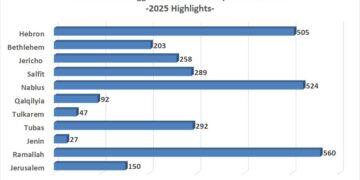
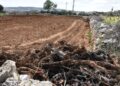
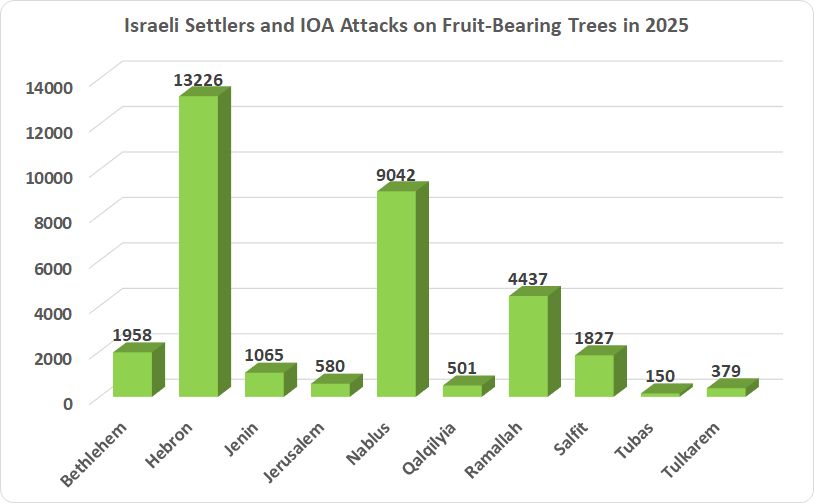
 The year 2025 saw a significant and unprecedented rise in the number of Palestinian trees uprooted and destroyed. Field data from the Applied Research Institute – Jerusalem (ARIJ) indicate that over 33,000 trees—both fruit-bearing and newly planted—were uprooted during the year, reflecting the scale of systematic targeting of Palestinian agricultural lands and trees.
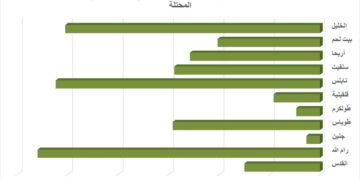
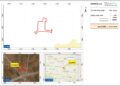
The attacks were particularly concentrated in several Palestinian governorates, with Hebron, Nablus, and Ramallah being the most affected, respectively. Figure 1 illustrates the geographic distribution of tree uprooting carried out by Israeli settler groups and occupation army, highlighting the increasing intensity of these violations in the mentioned governorates.
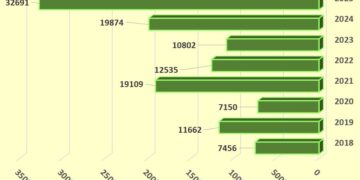
 It is noteworthy that 2025 saw an unprecedented increase in the number of trees uprooted and destroyed by Israeli settlers and occupation army compared to previous years. This surge reflects a clear and systematic escalation of attacks on Palestinian land and livelihoods. These violations are closely linked to Israeli government policies, including the construction of settlements, the establishment and expansion of illegal outposts on Palestinian land in the occupied West Bank, and the transfer of settlers into these areas—actions that undermine any prospects for achieving a just and lasting peace. Figure 2
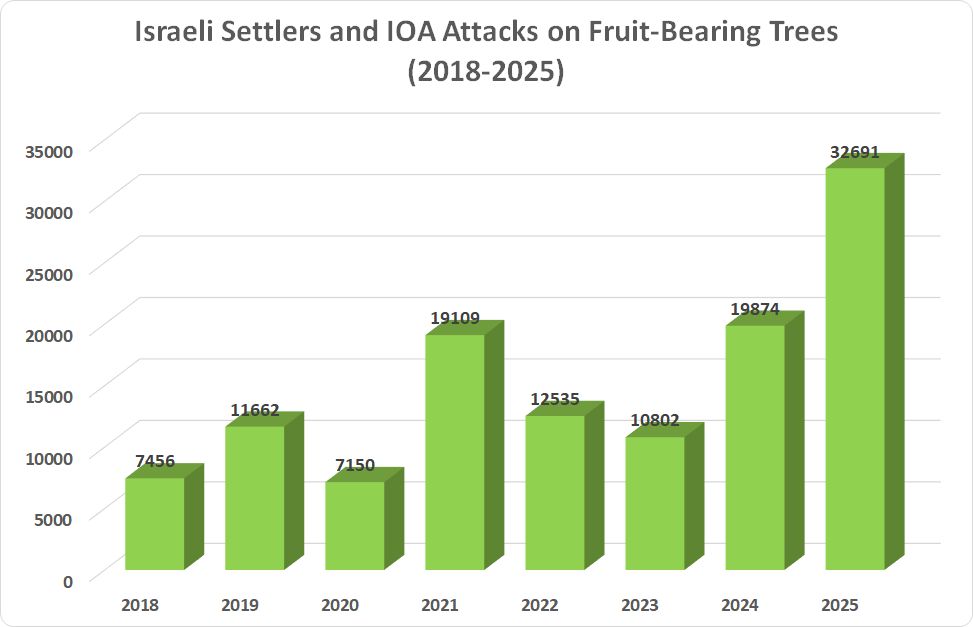
Figure 2: Palestinian trees uprooted by the Israeli occupation and settler groups over the past years.
These practices constitute a flagrant violation of the principles of international humanitarian law, particularly the 4th Geneva Convention relative to the Protection of Civilian Persons in Time of War (1949), Article 53, which “prohibits an occupying power from destroying private property except where such destruction is rendered absolutely necessary by military operations.”[2]
The uprooting of Palestinian trees has been carried out either as acts of retaliation and provocation, or for the purpose of establishing settlement-related projects, such as the construction of settler roads or the establishment of settlement outposts, in addition to other settlement activities carried out by settlers against Palestinians and their property. …
Article 49(6) of the Fourth Geneva Convention of 1949 also prohibits “the transfer of the occupying power’s civilian population into the territory it occupies.”[3] The absence of legal accountability and the failure to prosecute Israeli settlers who commit such violations encourage further violence, reinforcing a climate of impunity. This, in turn, leads to an escalation of attacks and violations against Palestinians, their land, property, freedoms, and rights, and renders Israeli settlement activity a major obstacle to achieving peace.
[1] Rolling list: Ethnic cleansing of Palestinian communities and lone families in the West Bank
https://www.btselem.org/settler_violence_updates_list?importance=1
[2]Geneva Convention relative to the Protection of Civilian Persons in Time of War
[3]Geneva Convention relative to the Protection of Civilian Persons in Time of War
Prepared by:
The Applied Research Institute – Jerusalem